.svg)

.svg)

EVs are the solution to grid congestion
From 2030, every new passenger car sold in the Netherlands must be electric – so how does an electricity grid that already struggles with 700,000 electric cars cope with 1.9 million? Almost 600 hours of negative electricity prices in 2025 tell us that the problem is not a shortage of energy but the timing of when it is used.
This article was first published in Het Financieele Dagblad on 29 June 2026.
The grid is not short of infrastructure – it is short of flexibility
Measures to tackle grid congestion have so far focused mainly on grid reinforcement and on limiting charging speeds during peak moments, known as grid-aware charging or netbewust laden in Dutch. We know that the grid is used less than 30% of the time so, in theory, three times as much power could flow through it. However, peak demand in the evening overloads it.
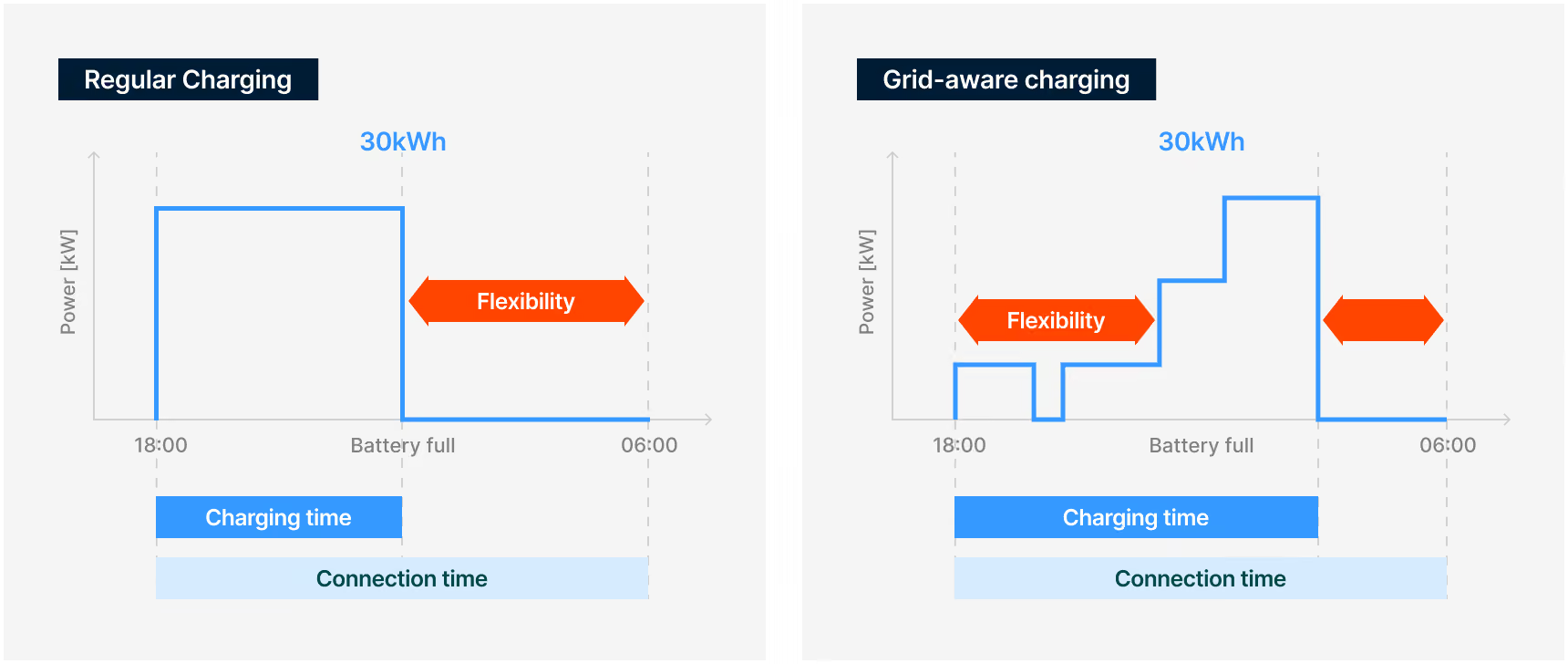
Supply-side solutions are necessary but only scalable to a point. Tackling grid congestion calls for better alignment between demand and supply. After all, we do not solve traffic jams by adding extra lanes. EV drivers who charge outside peak hours and are providing a solution to this challenge should be rewarded for doing so.
Data from millions of public charging sessions in the Netherlands shows that on average 67% of energy use can be shifted to off-peak hours without any effect on charging reliability. The flexibility already exists, but to unlock it drivers need a financial incentive to take an active part in smart charging. Cashback is that incentive.
Cashback turns parked cars into flexible grid capacity
With support from the European Union, Deftpower has developed a smart AI model that automatically forecasts and runs public charging sessions, delivering maximum flexibility for the grid without any cost to the driver experience. Based on a driver's planned departure time and required battery charge, the system can spread the charging session smartly across the full parking window. For every kilowatt hour shifted to off-peak hours, drivers receive cashback. The cashback is funded by the price difference between peak and off-peak hours on the energy market, with no subsidy required.
Cashback also reaches lease drivers, where tariff discounts often have no effect. Fleets account for 60% of the EVs in the Netherlands, yet business drivers usually do not pay their vehicle's energy costs themselves. As a result, a discount on the charging tariff stays invisible to them. Cashback works differently, because the reward goes straight to the driver rather than to the company that pays the energy bill.
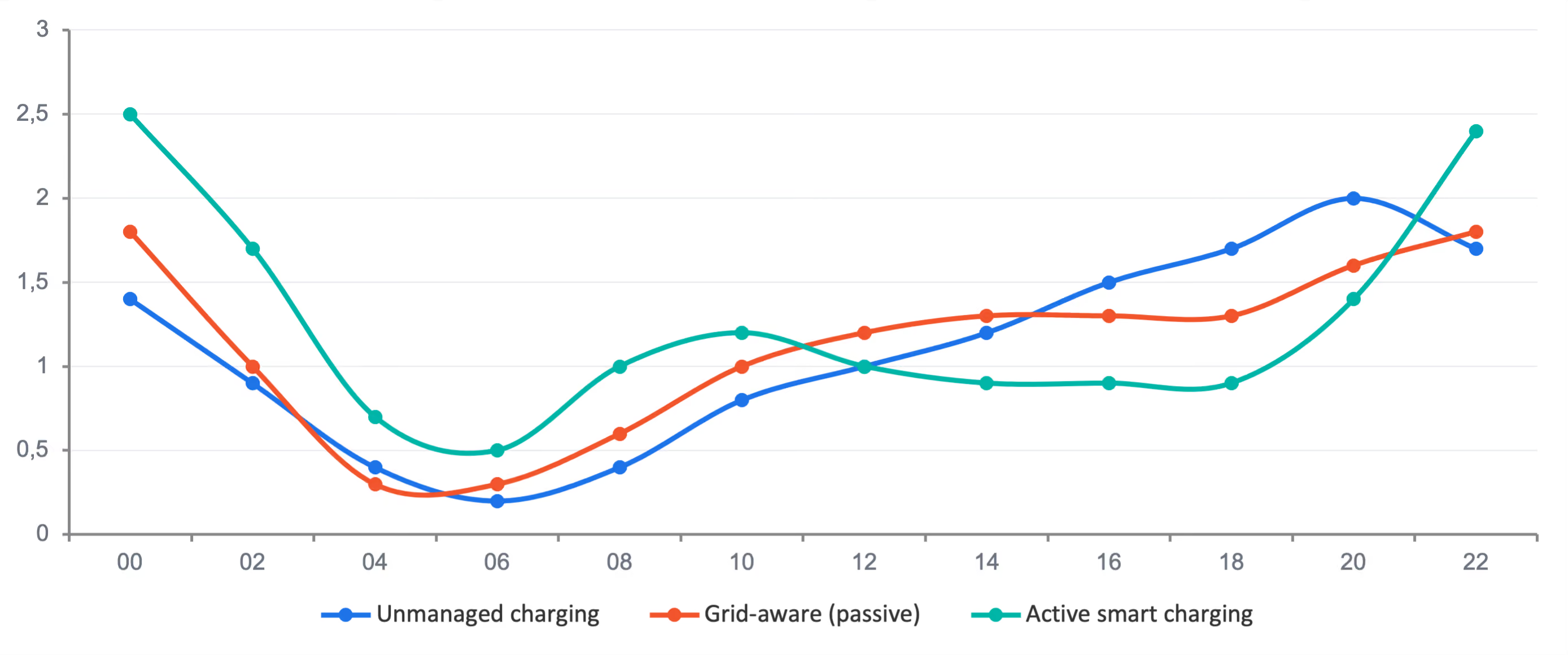
Data shows that the shift that active smart charging achieves delivers twice as much peak reduction as passive grid-aware charging, as proven by results in the Amsterdam and Utrecht regions in 2026. As participation grows, the benefits compound. Charge point operators improve their margins, drivers pay less, and the grid can support a growing electric fleet without extra infrastructure.
A solution the market already benefits from today
The proof is already running at 20,000 charging points across the Netherlands, so technology is no longer the question. How quickly the Netherlands meets its 2030 targets depends on how fast operators move from selling energy to buying flexibility. Every parked EV is flexibility waiting to be used, and unlocking it is how the country will be able to power a fast-growing electric fleet without waiting for the grid to catch up.