.svg)

.svg)

From grid-aware charging to grid-aware behaviour. How cashback incentivises drivers to charge off-peak
Every evening across Europe, millions of EV drivers plug in at the same time, and grid infrastructure built for a different era is struggling to keep up. The default response has been to build more infrastructure or curtail charging speeds, but neither addresses the root cause: when and how drivers choose to charge. Deftpower has developed a model that does, using cashback and smart-charging technology to incentivise drivers to charge outside peak times.
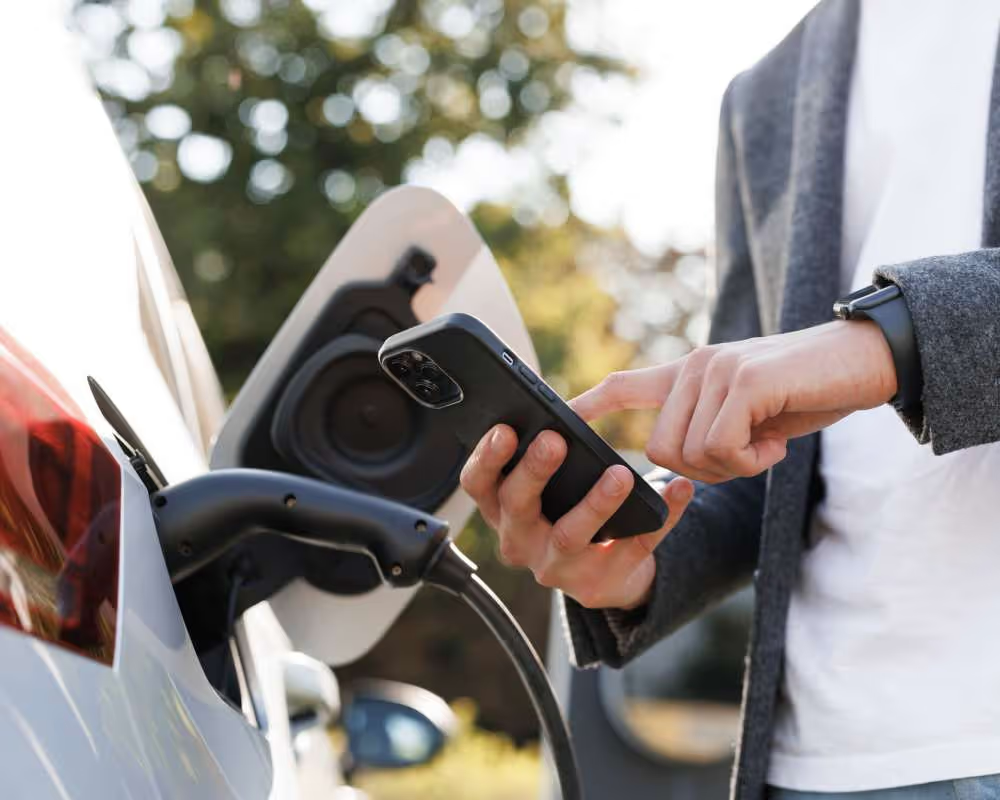
Solving the congestion problem must involve drivers
Grid-aware charging has been implemented as a measure to combat congestion, but curtailing charging speeds during the grid's busiest times comes at the driver's expense. The more the charging experience is restricted, the less appealing electric driving becomes, and that undermines the very transition the grid needs to support.
The most effective way to create flexibility is to involve drivers and incentivise them to shift their charging to periods of lower demand. Data from millions of charging sessions shows that 67% of consumption can be shifted without affecting driver mobility, meaning existing infrastructure could support up to three times more charging without restriction.
Deftpower has created a model where drivers are rewarded with cashback for providing that flexibility, whether by charging during off-peak hours or enabling the system to schedule their charge from peak to off-peak. Without a direct financial incentive, drivers have no reason to change when they charge. But the data shows that with cashback, they do.
The results: how cashback shapes charging behaviour
TotalEnergies, enabled by the Deftpower eMSP platform, introduced Off-Peak Rewards across more than 2,000 charging points in Noord-Holland, Utrecht and Flevoland. Off-Peak Rewards is the baseline, with every driver automatically earning 4 cents of cashback for every kWh charged outside peak hours.
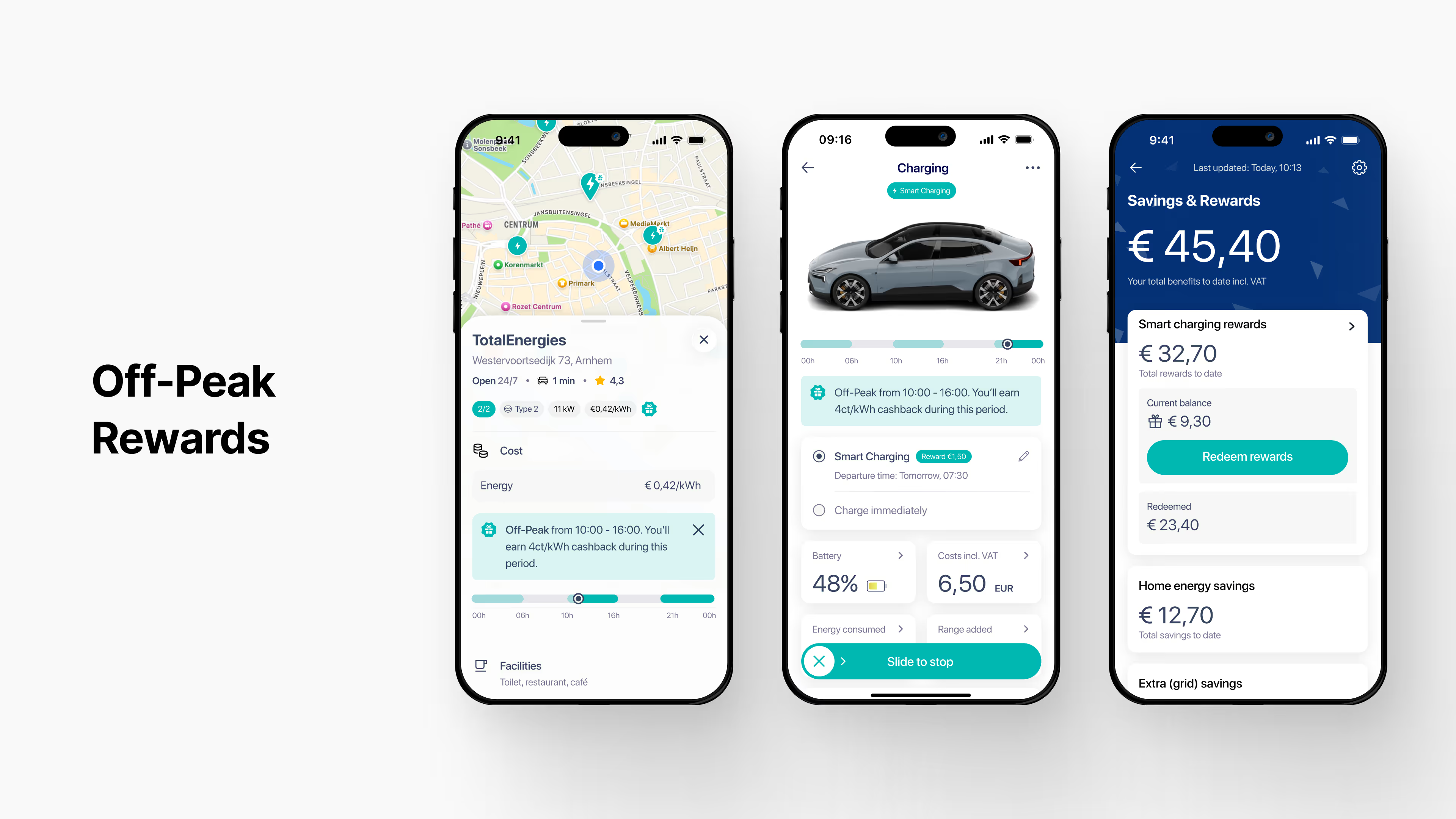
Smart charging builds on top of it: drivers who enter a departure time and desired state of charge earn a higher return, as the system spreads their charge across off-peak periods without compromising their charging needs. The willingness to participate is significant when cashback is available, as 65% of the people that adopt smart charging activate it by default instead of manually.
The results so far in 2026 show what Off-Peak Rewards with TotalEnergies has achieved in shifting charging behaviour. Over 20,000€ has been paid out in cashback to more than 7,000 drivers across 33,000 off-peak sessions. Smart charging adoption more than doubled among drivers who earned off-peak rewards, with over 4,000 sessions completed by users who shared their departure time, a third of which following the AI prediction.
Drivers who received cashback for the first time increased their off-peak charging by 12%, and active smart charging reduces peak demand by 67% compared to unsteered charging – twice as much as with passive measures like grid-aware charging (netbewust laden). Not involving the driver limits the flexibility available to the grid; by rewarding them, the flexibility pool grows and becomes a controllable asset.
Driving a lasting change in charging habits for all drivers
Earning cashback for grid-aware charging is a new concept for most drivers, but once introduced, they engage with it. Early data shows that adoption is durable: drivers who enable smart charging continue to use it, rather than reverting to their previous patterns. For grid operators, that means a participating population whose charging patterns become more predictable the longer they are engaged.
Because cashback pays out directly to the driver, it reaches fleet drivers too. They make up 60% of EV drivers in the Netherlands and average 11 sessions per month compared to 6 for private drivers, yet have no financial reason to charge off-peak without it. Direct cashback cuts through the structural barriers, making this the first charging model that reaches the full EV-driving population.
Smarter charging is how the grid will keep up with EV growth
As the "cashback-for-flexibility" model extends across wider charging networks, the cumulative effect of individual charging decisions builds the kind of flexible, responsive demand profile that grid operators need as EV adoption continues to grow.
For drivers, being rewarded for grid-aware charging should become the new normal; for the grid, the full breadth of EV charging becomes a dependable source of flexibility. This way, the market becomes scalable and profitable for the whole value chain.
