.svg)
.svg)

DSO Liander partners with Deftpower in public smart charging pilot that rewards EV drivers for flexibility
For the first time in the Netherlands, a grid operator is involved in procuring flexibility through MSPs. The pilot is an initiative by Liander in collaboration with Deftpower, CPOs Vattenfall and Allego, and MSPs ANWB and Athlon. At 12,000 Vattenfall and Allego charging points in Gelderland, EV drivers receive a financial reward for easing grid congestion.
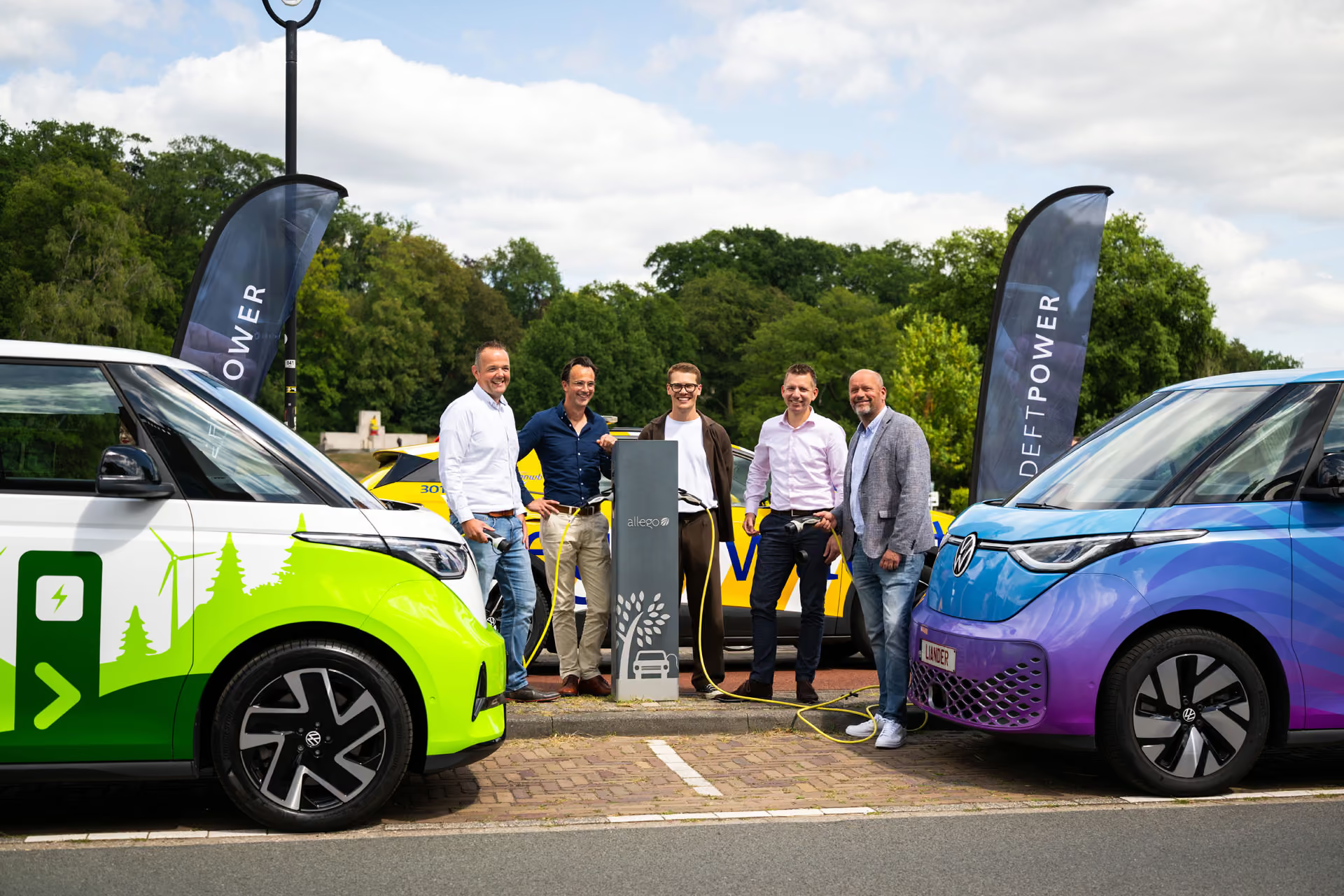
From left to right: Emiel van Steenselen (Allego), Sven Schutte (ANWB), Rick Ruiter (Liander), Marc Diks (Deftpower) and Paul Bouwmeester (Athlon).
The pilot explores whether smart charging through the MSP is a scalable way to unlock grid flexibility while respecting individual driver preferences.
For more information about the pilot, read the official Liander press release here (in Dutch).
The MSP makes smart charging scalable
The MSP is the natural layer for unlocking this flexibility because it already manages the relationship with the driver. Based on data from ElaadNL (2025), 97% of sessions at public chargers start with a charge card or app from a mobility service provider.
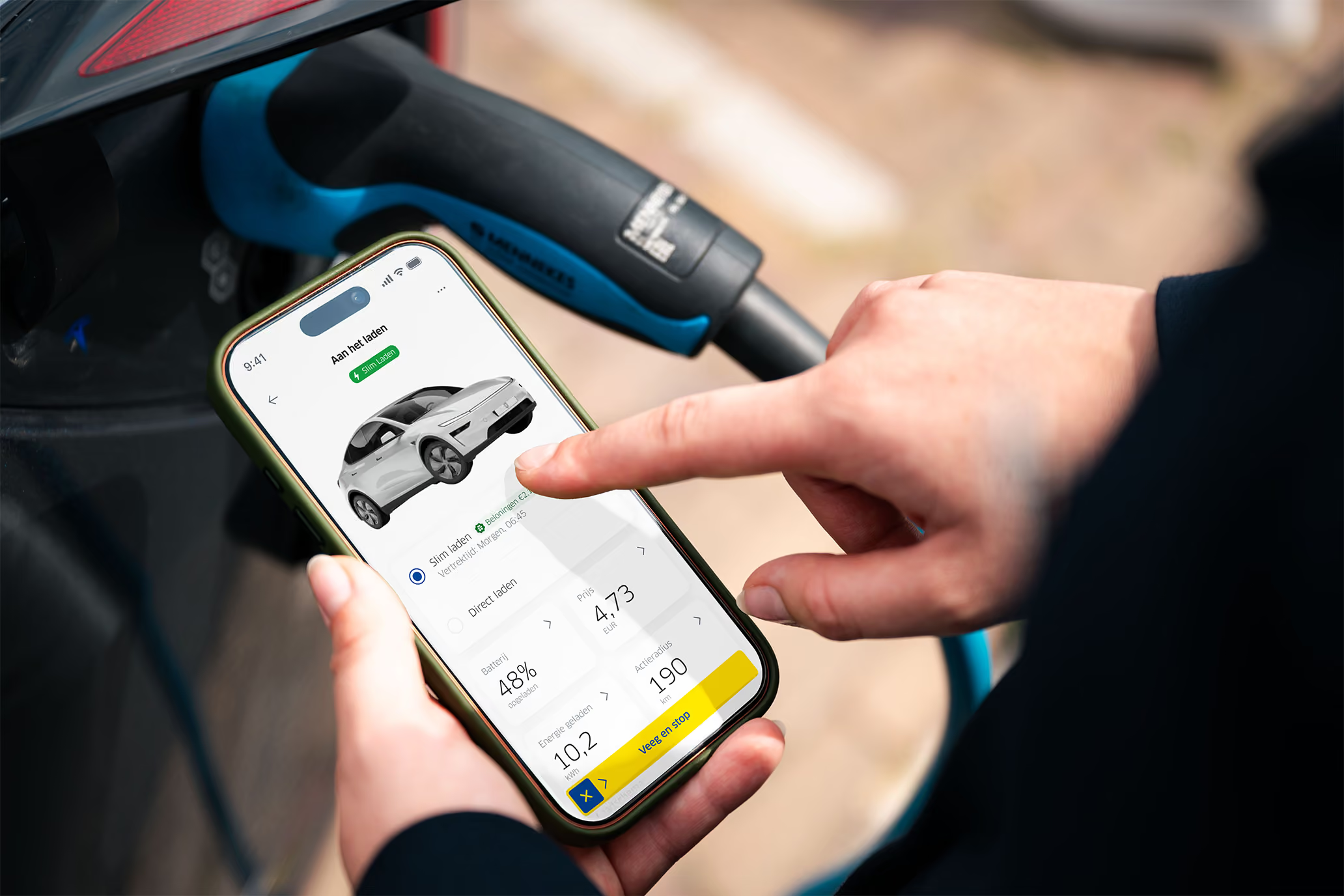
Through the MSP app, drivers share their departure time and desired battery level, while an active car connection captures the current state of charge. Deftpower then uses this information together with energy market data to create an optimised charging schedule. This profile is executed by the car or can be sent directly to the charge point if it supports OCPI 2.2.1 Charging Profiles.
MSPs already manage charging across different networks and have a direct relationship with EV drivers. With a driver’s one-time consent, they can unlock flexibility across charging networks and grid areas. This keeps the smart charging experience consistent, rather than fragmenting it across separate propositions that hinder adoption at scale.
Using flexibility where it’s available
Grid congestion is a growing concern for DSOs in the Netherlands, and since July 2026, CPOs no longer get priority for a grid connection in congested areas. This means that flexibility is now critical to scaling charging infrastructure alongside the rapidly growing electric fleet.
Pilots like the one in Gelderland are an important step towards understanding what it takes to build a more flexible grid. In a region where congestion is particularly acute, the pilot will test how much flexibility is available in practice, whether drivers are willing to shift their charging and how reliably this can reduce demand during peak hours.
We need to use flexibility where it is available, not where it compromises reliability. Deftpower’s platform knows when vehicles need to leave, how much energy they require and which sessions can safely be shifted. With our solution, charging sessions can now also respond to local grid conditions, energy availability and driver needs in real time. – Marc Diks, COO at Deftpower.
At scale, thousands of smart charging sessions become a distributed layer of flexible demand that can be activated, shifted or paused to reduce peak pressure and make better use of renewable energy. While passive grid-aware charging measures are important for protecting the grid during peak times, smart charging has the potential to address some of today’s biggest challenges for the energy transition.
The findings of the Liander pilot will inform a joint advisory report for the sector, providing other grid operators and e-mobility partners with practical guidance on how smart charging through the MSP can reduce peak demand while creating value for DSOs, CPOs and drivers.