.svg)

.svg)

Off-Peak Rewards: How CPOs boost charger utilisation during lower-demand periods
Charge points across the Netherlands are underutilised for most of the day while demand – and energy costs – cluster heavily into a narrow peak window. Off-Peak Rewards is the mechanism Deftpower has developed to help CPOs increase utilisation and spread that demand more evenly, while lowering energy costs by giving drivers a direct financial incentive to charge at times of lower demand.
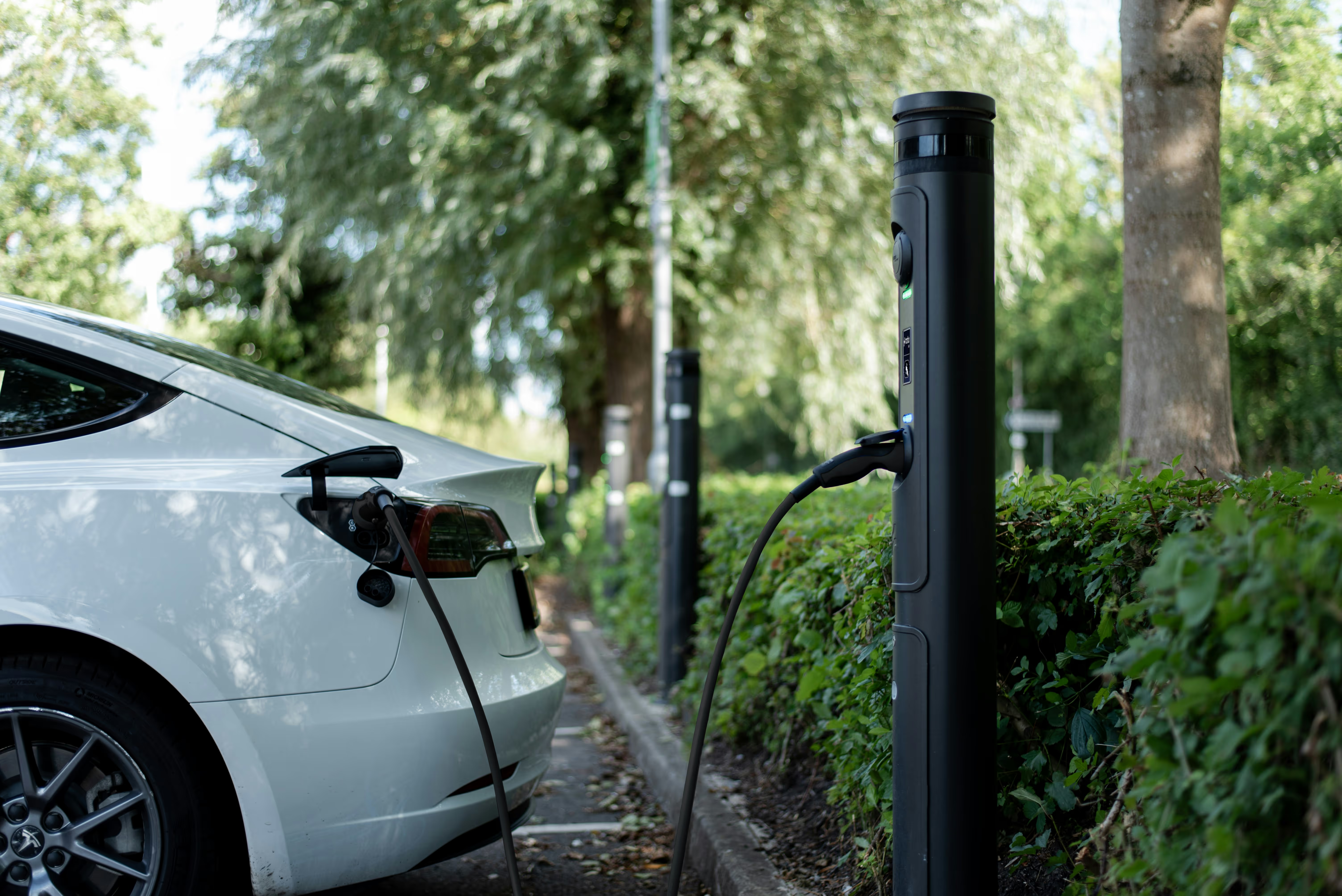
Charging points across the Netherlands sit idle for most of the day. Demand clusters so heavily during the 4–9 PM peak that per-hour charging intensity is three times higher than during off-peak hours, concentrating nearly half of all energy demand into the most expensive 5-hour window while infrastructure remains underutilised throughout the day.
A more even spread of consumption would make better use of existing chargers, reduce peak pressure on the grid and lower energy costs for both CPOs and drivers. Achieving that requires driver participation, and the only way to secure it is through financial incentives for them. Deftpower has developed Off-Peak Rewards to do exactly that.
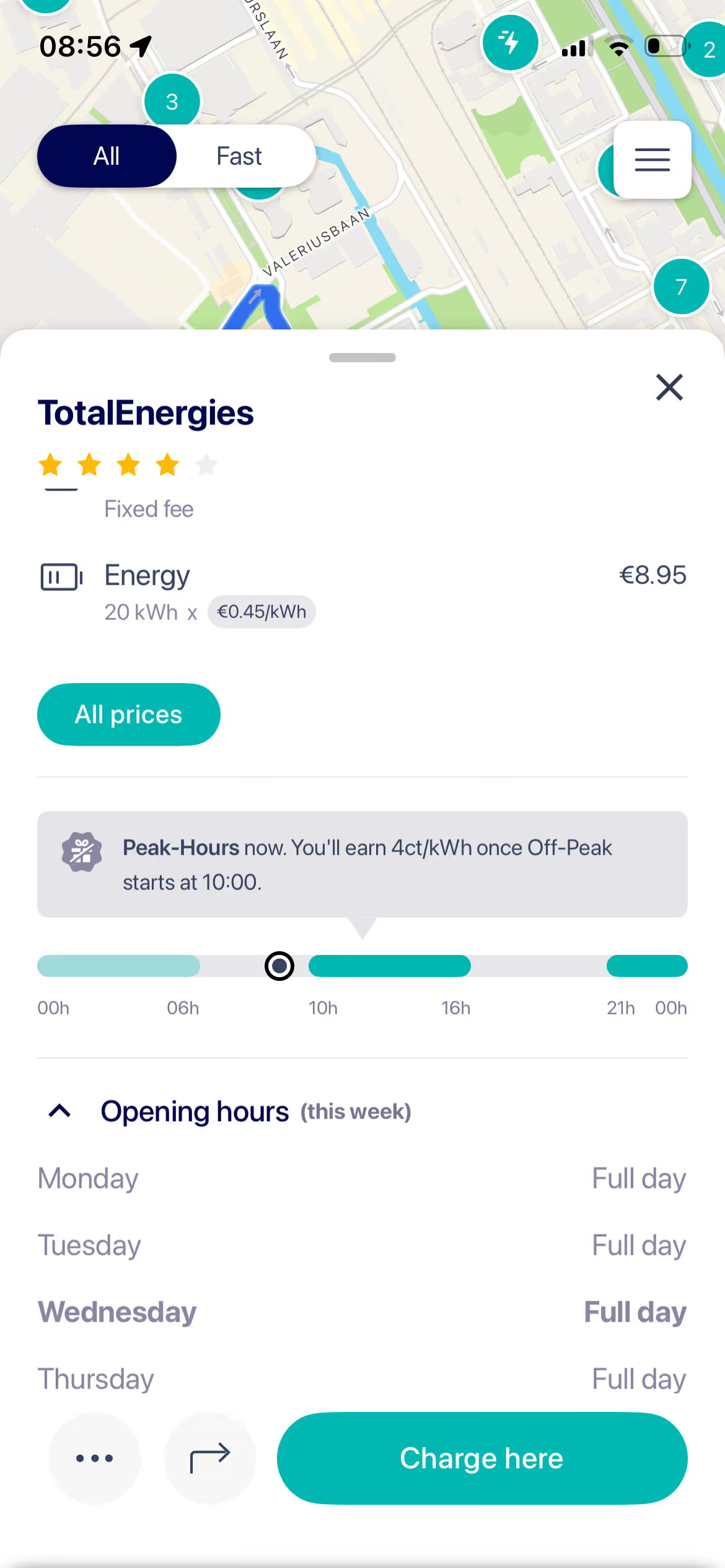
What are Off-Peak Rewards and how do they work?
Shifting demand to off-peak hours lowers the cost of energy for CPOs, increases the share of renewables in the energy mix and reduces pressure on the grid. But unlocking that flexibility relies on incentivising drivers to change their behaviour.
Off-Peak Rewards is a concept introduced by and created with TotalEnergies, enabled by Deftpower's MSP technology, that gives drivers fixed cashback for every kWh consumed during predefined lower-demand windows. The scheme is live at over 1,000 charging locations in the MRA-E region of the Netherlands, with off-peak windows running from 10AM to 4PM and from 9PM to 6AM.
Every driver who charges during these periods automatically earns 4 cents per kWh in cashback, with no opt-in or vehicle connection required.
Why cashback unlocks access to fleets for CPOs
Cashback provides an incentive where other mechanisms fall short. For example, dynamic tariffs are complex to manage, complicated to apply across different pricing structures and only effective for consumers paying their own charging costs. Cashback sidesteps all of that by paying out directly to the driver after the session, creating a personal incentive that works regardless of who pays the charging bill.
That matters most for the 60% of electric car drivers who drive a company car. In the Netherlands, we see that fleet drivers average 11 sessions per month compared to 6 for private drivers and consume 59% more energy per session, yet remain underrepresented on many CPO networks because they have no financial reason to favour one network or charge at a different time.
Cashback gives them a reason to charge at certain CPOs and in turn gives CPOs the flexibility to align the cashback they offer with the energy prices they pay during off-peak periods, turning lower energy costs into a direct lever for steering driver behaviour and improving utilisation across the day.
Smart charging amplifies Off-Peak Rewards
Based on Q1 2026 data across all CPOs in the Netherlands, smart-charging drivers consume 61% more energy per session than the network average, and the cashback data reinforces why that matters. In that same quarter, over 6,000 drivers across approximately 25,000 sessions earned an average cashback of €0.73 per session, rising to €1.31 when smart charging is enabled.
Drivers who receive cashback for the first time increase their off-peak charging by 12%, a compelling indication that direct financial incentives are among the most effective tools available for shifting charging demand and creating flexibility for CPOs to buy.
From selling electricity to buying flexibility: The path to CPO 2.0
Behind those numbers lies an opportunity that is reshaping how CPOs think about their role in grid management and the model emerging to capture it: the CPO 2.0.
CPO 2.0 is one that moves beyond selling electricity and instead buys flexibility from drivers. When CPOs and MSPs, as infrastructure provider and connection point to the driver respectively, work together, driver behaviour becomes a resource that can be shaped, rewarded with mechanisms like Off-Peak Rewards, and turned into grid value at scale.
With more charging happening during off-peak periods, CPOs are able to lower their energy costs and can share those savings back with drivers, reducing the overall cost of charging at their stations. This improves utilisation throughout the day and strengthens the CPO's commercial position in tenders, partnerships and long-term relationships with drivers.
A proven, scalable solution to a growing CPO challenge
The results from Off-Peak Rewards prove that a more even spread of driver consumption across the day is achievable, and that cashback is the mechanism that makes it happen. The benefits reach much further than the charging station: municipalities gain more productive use of public charging infrastructure, DSOs see less congestion on the local grid, and drivers earn a reward for behaviour that does not affect their charging experience.
As more CPOs and MSPs adopt this model across the Netherlands and Europe, Off-Peak Rewards are becoming the standard for the next phase of public charging, one that manages demand more evenly and increases utilisation for existing charging infrastructure.