.svg)

.svg)

Introducing Deftfleet: Fleet charging, made simpler to manage
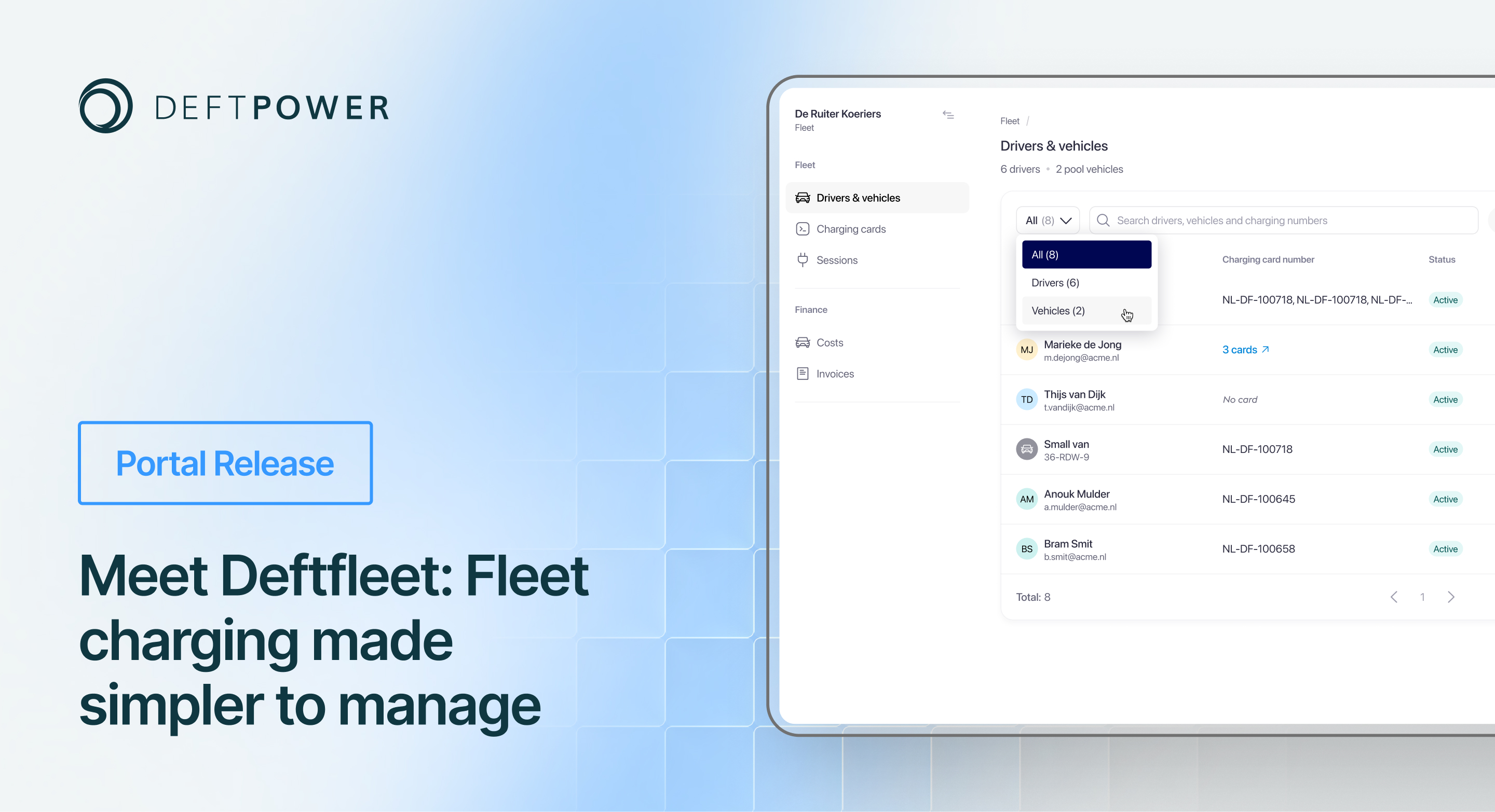
Deftfleet gives MSPs and mobility providers a ready-to-brand portal for small and mid-sized business fleets without having to design and build the fleet-manager experience themselves. Fleet managers get one clear place to manage drivers, vehicles, charging cards, sessions, costs and invoices.
Why day-to-day fleet charging is still harder than it should be
Fleet managers are responsible for drivers, vehicles, charging cards, charging activity, costs and invoices. But for many, fleet management is only one part of their role. Our research found that they may spend just five to ten hours a week on it while the tools available to them assume deep EV and platform knowledge.
The portal fleet managers use today was built for MSP operators running large fleets, not for the people managing a handful of company cars day to day. Today, a country manager overseeing operations for a million drivers and an HR manager responsible for three company cars are expected to work in the same portal (with the same navigation, permissions and platform complexity), even though they are doing very different jobs.
Fleet managers are therefore faced with concepts and settings they do not need or recognise. Everyday activities are spread across different areas. Platform language does not reflect how they describe their work. And people hesitate to take action because they are unsure what a setting or screen will do.
Even simple tasks surfaced uncertainty:
“After adding the driver, it’s a black box. Will this email address receive a message or not? Or do I need to inform this person as a fleet manager?” — E-mobility product lead at a municipal energy provider
The problem isn’t fully solved by simplifying the existing portal. Fleet managers needed a product designed around their own work.
Our vision: One end-to-end fleet-charging experience, built around the fleet manager’s workflow
Our vision for Deftfleet is an end-to-end fleet-charging experience: from a business joining a mobility provider and getting its drivers ready to charge, to managing charging access, policies, reimbursement and costs as the fleet changes. Deftfleet builds on capabilities that already exist across the Deftpower platform, bringing them into a dedicated experience for fleet managers and extending that experience over time. The first release establishes the foundation around the essentials of day-to-day fleet charging.
Joining the charging service
For a new business fleet, the journey begins with joining a mobility provider’s charging service. The vision is a clear, branded path from submitting the business’s details to gaining access and setting up the fleet, while allowing the provider to review the business before it joins.
Getting drivers and vehicles ready to charge
Once the business has access, the focus shifts to getting its fleet ready to charge. Fleet managers need to add drivers and vehicles, support both individually assigned drivers and shared pool vehicles, and connect charging access to the right person or vehicle. As fleets become more complex, the vision is to help them organise that work across entities, countries and cost centres, and determine who is eligible for different charging services. The aim is a clear handoff from fleet setup to a driver who is ready to charge.
Setting the rules for company charging
Before charging begins, fleet managers also need to decide how company charging can be used: where drivers can charge, which costs the business will cover and how different groups should be treated. Over time, the vision is to bring those decisions into Deftfleet. For fleets with home charging, eligibility, charger setup and reimbursement should become part of the same connected experience rather than remain separate administrative tasks.
Understanding spend and spotting what needs attention
Once drivers begin charging, the questions become practical: who charged, where and when, which driver, vehicle or card was involved, and what did it cost? The broader vision is to connect that information across public, home, workplace and depot charging. Over time, fleet managers should be able to follow spend, understand reimbursements and connect charging activity to the invoices the business receives without piecing the story together across different systems.
In the longer term, a connected experience could also help fleet managers recognise when something needs attention, for example, an incomplete driver onboarding, a disconnected home charger, spending outside policy or unusual charging behaviour. The goal is to give the fleet manager enough context to understand what happened and decide what to do next, rather than leave them to discover problems across separate screens.
Keeping up as the fleet changes
The journey continues as the fleet changes. Drivers join or leave, vehicles are replaced, groups evolve and policies need to be adjusted. Over time, Deftfleet is intended to keep access, charging activity, reimbursement and costs connected through those changes, giving fleet managers one continuous way to manage fleet charging.
Building a branded fleet-charging proposition
For MSPs and mobility providers, Deftfleet is a foundation for building a fleet-charging proposition under their own brand, without designing and developing the fleet-manager experience themselves. The first release provides the daily-management essentials; hosted onboarding and future extensions will help connect more of the customer experience.
Providers can use Deftfleet as their fleet-manager portal or build their own experience using Deftpower’s APIs and platform capabilities.
The first release: A strong foundation for the fleet experience ahead
If you’re already managing business fleets through the Deftpower portal, many of the underlying capabilities will be familiar. What changes with Deftfleet is how they come together: in a dedicated portal organised around the fleet manager’s tasks, language and decisions. The first release focuses on four essentials of day-to-day fleet charging: drivers and vehicles, charging cards, sessions and costs, and invoices.
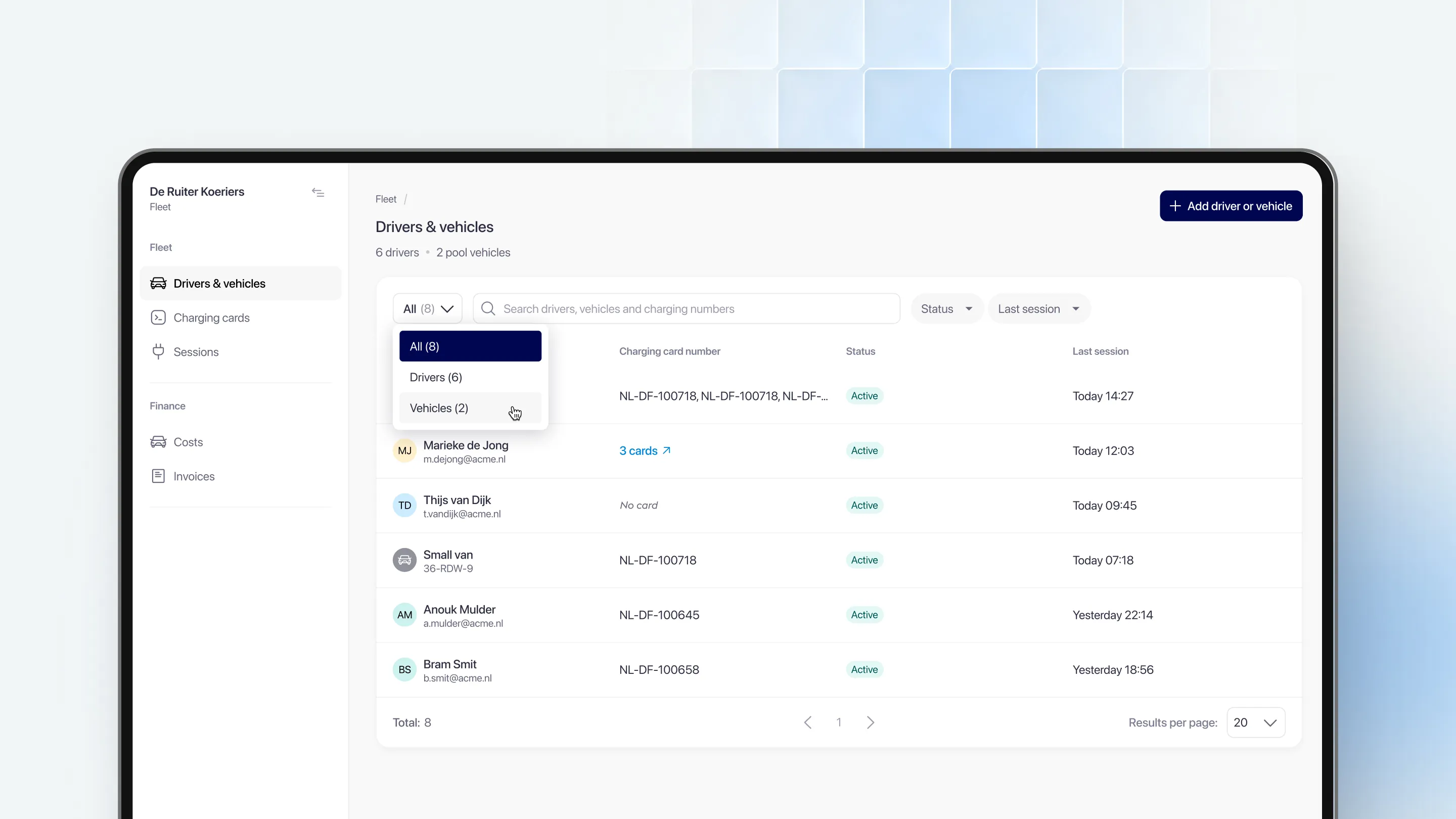
Know who and which vehicles are part of the fleet
If they wanted to add a colleague or find a shared company car today, fleet managers would have to navigate concepts such as users, profiles and shared profiles. However, that’s not how they think about their fleet.
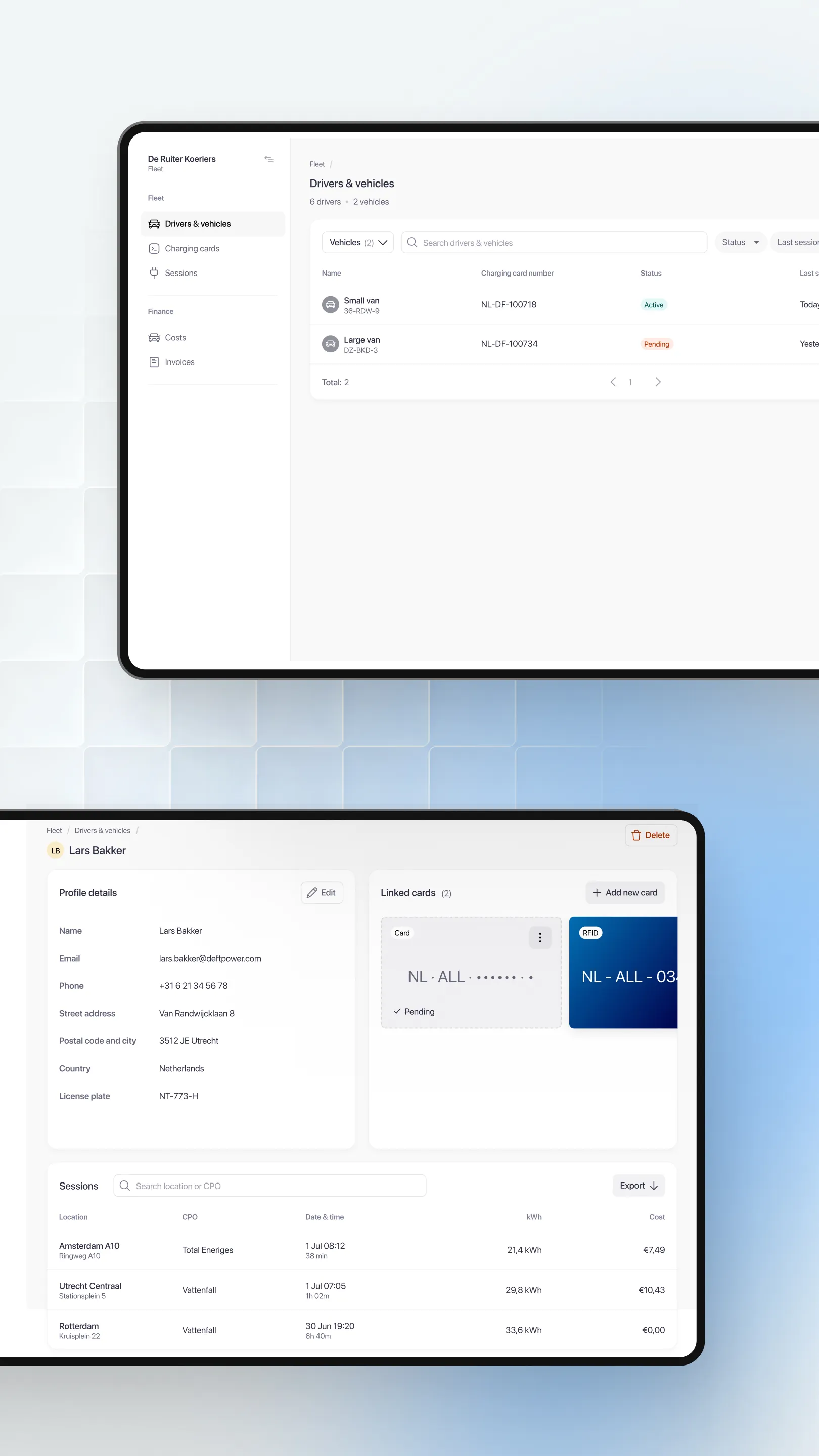
Deftfleet brings drivers and vehicles together in one filterable overview, using names and details fleet managers recognise. They can check status and recent charging activity, find the right person or pool vehicle, and open the details to manage it.
Drivers can be added with or without a charging card, and shared pool vehicles can be managed alongside individual drivers.
Keep charging access under control
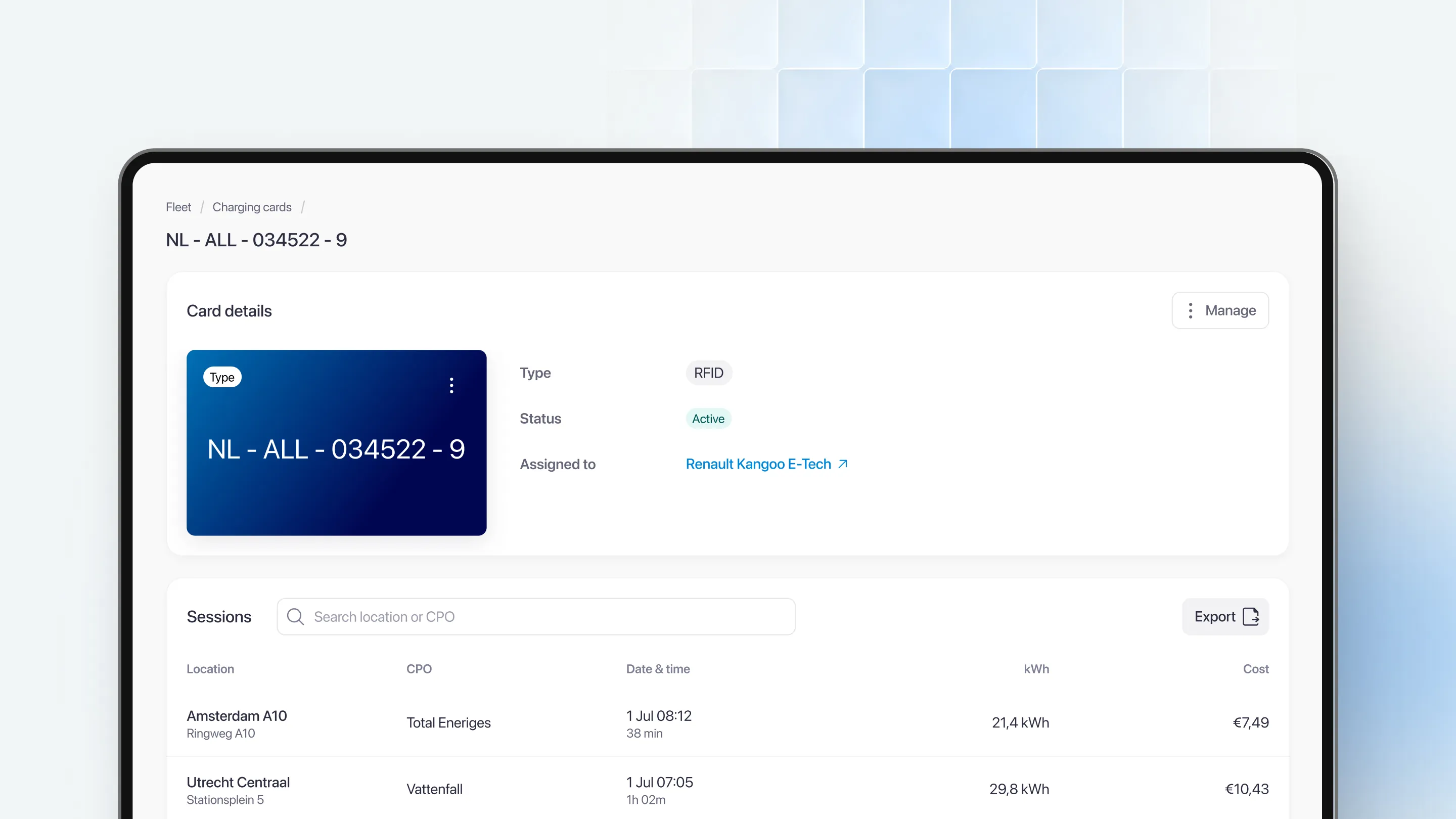
When a driver reports a lost card or asks whether a new one is ready to use, the fleet manager has to find the right card and check its status before taking action.
Deftfleet brings those details together, showing which driver or vehicle each card belongs to and whether it is pending, active, blocked or inactive. Fleet managers can block a card when necessary or order a new one for a driver or vehicle.
Understand charging behaviour and costs
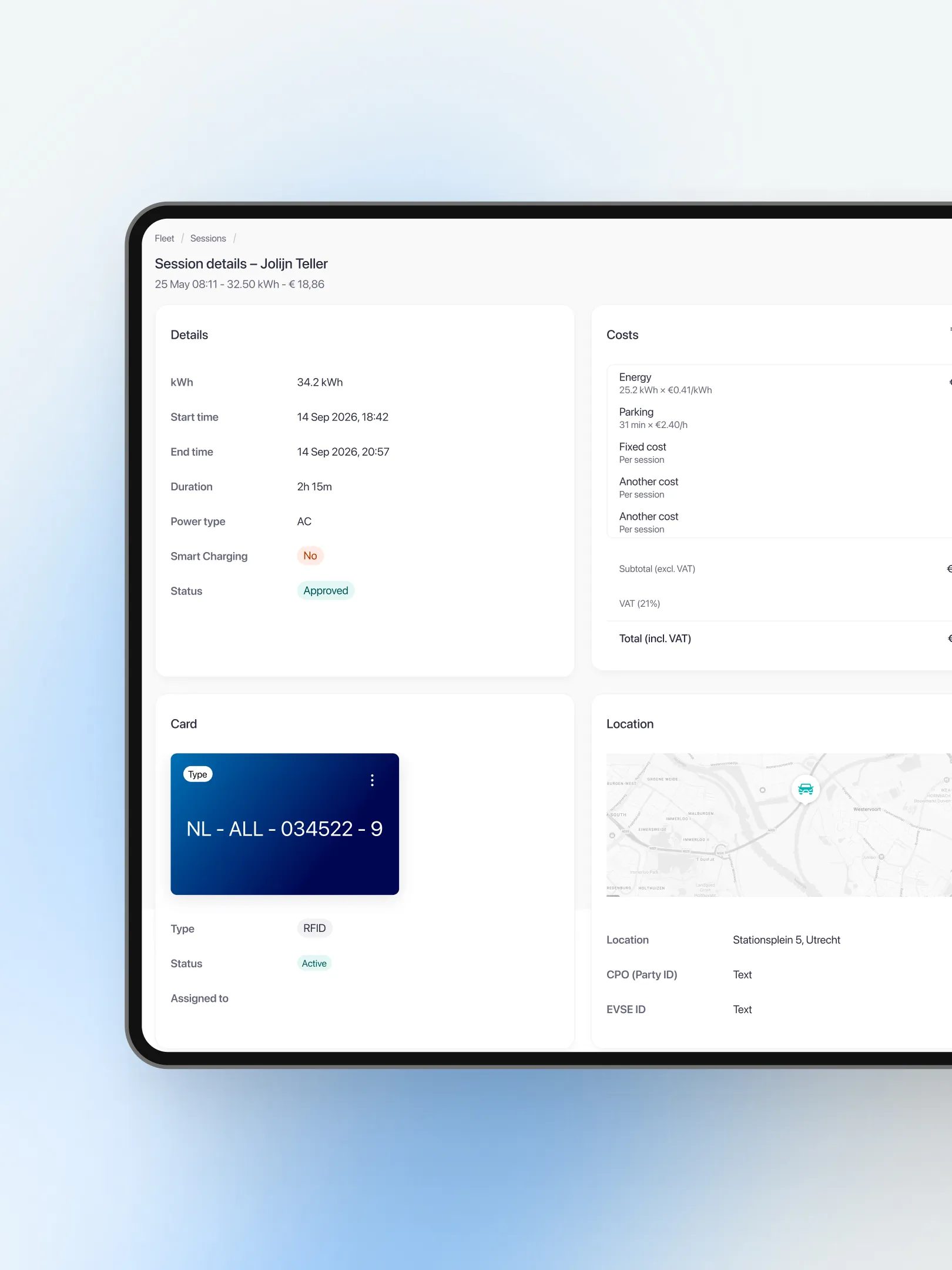
A list of charging sessions doesn’t immediately tell a fleet manager which drivers or vehicles account for the spend. Checking an individual charge and understanding costs across the fleet are two different tasks. We’ve brought both into Deftfleet.
For an individual session, fleet managers can see who charged, where and when, how much energy was used and what it cost. Session details show the charging summary and cost breakdown, including subtotal, VAT and total.
For the wider picture, the cost overview shows total cost and energy use over a selected period, with a breakdown by driver or vehicle.
Follow invoices without searching across systems
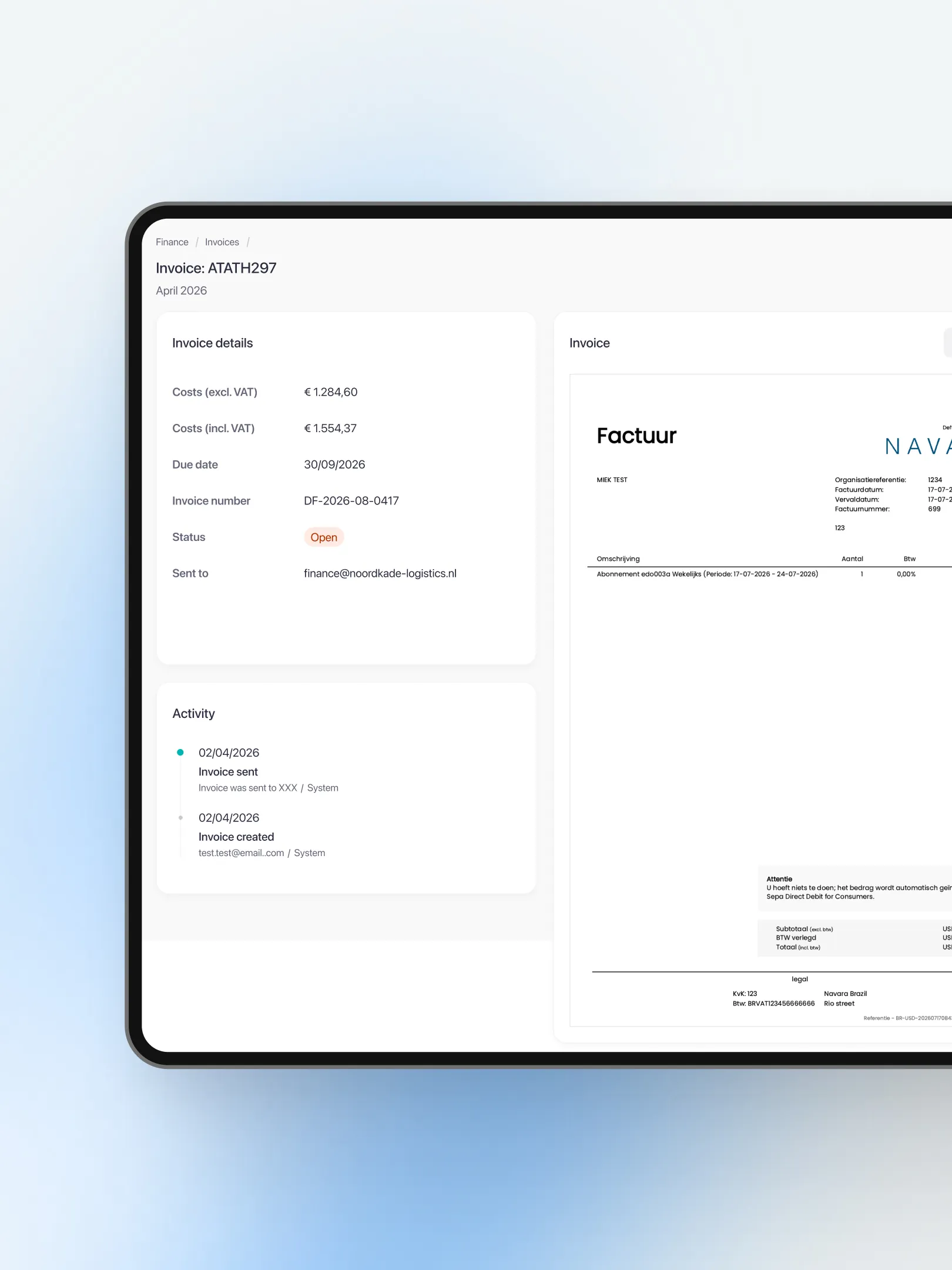
When checking an invoice, a fleet manager may just want to know which period it covers, how much is due and whether it has been paid, or download a copy for finance. We’ve brought those details together in Deftfleet so they can handle that work directly.
The invoice overview shows key totals and payment status. Fleet managers can open an invoice to see its details and download the PDF.
During hands-on testing with an existing mobility provider, the core workflows were described as “very intuitive,” with confidence about rolling out the portal.
“I think in total, it’s really a strong base for the first iteration.” — E-mobility product lead at a municipal energy provider
What comes next
We’re now building hosted self-onboarding, and bulk charging-card ordering is also planned. These extend the first release by reducing the manual work involved in bringing new fleet customers onboard and getting cards to their drivers. Beyond that, we’re exploring groups, home charging, reimbursement and spending policies.
Bring new fleet customers onboard with less manual work
Self-service onboarding for business fleets
Today, bringing a new business fleet onboard means collecting company details, creating accounts, assigning access and explaining what happens next. That manual work repeats for every new fleet, making smaller customers costly to serve and the fleet offering harder to scale.
We’re building hosted self-onboarding to move that work into a branded self-service flow. Mobility providers will be able to share a sign-up link on their website, in an email or after a call, where prospective business customers submit their company, billing and fleet-manager details themselves.
The mobility provider’s admin team will be notified to review each request and approve or reject it. They can assess the business and manage credit and fraud risk before granting access. Approved fleet managers receive an email with the next steps to continue their setup.
Hosted self-onboarding is being built as an extension to the first release. The aim is to help providers grow their fleet offering without repeating the same manual onboarding work for every customer.
Make charging-card distribution easier to manage
Bulk charging-card ordering
Today, charging cards are ordered individually and shipped out in separate welcome packs. That doesn’t suit fleets that want to distribute cards themselves: for example, when managing pool vehicles or keeping a supply on hand for new drivers.
Planned bulk ordering will let fleet managers place an order through the portal and have the cards delivered together to the fleet. They can choose cards on their own or individual welcome packs shipped together in one box.
This gives fleets a self-service way to organise card distribution centrally, rather than arranging individual orders and shipments for every driver or vehicle.
Further ahead: Groups, home charging and reimbursement
A fleet might span several departments or locations, each with its own cost centre. Some drivers charge at home, others at work or on the road. Looking at drivers individually only tells part of the story when a fleet manager is trying to understand costs across the business.
We’re exploring how to make that easier to manage in Deftfleet through driver and charger groups, home and workplace charging, reimbursement and spending policies. The aim is to help fleet managers organise charging around how their business operates, with access, costs and billing connected to the relevant groups.
See Deftfleet in action
Whether you already serve fleet customers or are exploring a fleet proposition, see what Deftfleet could bring to your offering.
In a short product demo, we’ll show how fleet managers can manage drivers, charging cards, costs and invoices, and discuss how the portal could work for your business.